mason jars vs glass bottles juice storage is one of those things I never thought I would have opinions about until I started making juice at home more often. You know the moment: you finish juicing, your kitchen smells like fresh apples and ginger, and then you realize you have no clue what to store it in. Also, if you are still deciding whether you are more of a juicer or a blender person, I wrote about it here and it might help: detox juice recipe vs smoothies which is better. Anyway, once you start saving juice for later, the container matters more than you think. Flavor, freshness, and even whether you will actually drink it tomorrow depends a lot on the jar or bottle you choose. Let me walk you through what I have learned without making it complicated.
Key Benefits of Learning This Topic
If you are making juice at home, the storage choice is not just about aesthetics. It changes how your juice tastes the next day, how easy it is to grab on your way out, and how much you waste. I used to pour leftover juice into whatever glass was clean and then wonder why it tasted a little flat later. Turns out, oxygen and leaky lids can mess with your good intentions.
Here is what you gain by knowing the difference between mason jars and glass bottles:
- Fresher taste for longer, because a tighter seal slows down oxidation.
- Less mess in your fridge, especially if you are stacking or laying bottles on their side.
- Better portioning, so you are not constantly re opening one big container.
- More motivation to actually drink your juice, because it is easy to grab and it looks inviting.
Also, when you start trying different flavors, like a zingy green juice or something fruity, storage can make or break the vibe. For example, when I make this bright green one, I want it to taste crisp the next morning: bright refreshing fennel cucumber kale juice recipe.
The big takeaway is simple: mason jars vs glass bottles juice storage is really about matching your container to your routine. If your routine is chaotic, you need something that makes it easier, not fussier.
Common Challenges and How to Overcome Them
Let us talk about the annoying stuff, because it always shows up right when you are feeling proud of your homemade juice.
Oxidation and that not so fresh taste
Juice starts changing as soon as it is exposed to air. You might notice the color darken a bit or the flavor get less bright. The fix is to use a container that lets you fill close to the top, with minimal air space. Mason jars are great for this because you can pick the jar size that fits your batch. Bottles can be great too if you have the right size, but if your bottle is too big, you end up with a lot of air sitting above the juice.
Leaks, sticky fridge shelves, and broken trust
If a lid leaks even once, it is hard to love that container again. Mason jar lids can sometimes drip if the ring is not tightened evenly or if the sealing disk is worn out. Glass bottles usually win here if they have a solid screw top and a good gasket. My personal rule: if I plan to toss it in my bag, I use a bottle. If it is staying upright in the fridge, a jar is fine.
Smells and flavors that hang around
Garlic, ginger, and strong greens can leave a scent behind. Both jars and bottles can hold onto smells if you do not wash them well. A quick fix I swear by: warm water, a little dish soap, and a sprinkle of baking soda. Let it sit for 10 minutes, then scrub. Bottles sometimes need a bottle brush, though, which is one more thing to keep track of.
If you like bolder juices, like spicy or herbal detox styles, you will really notice this. I love making anti inflammatory blends, but yes, they can perfume your containers: anti inflammatory detox juice.
Essential Tools and Resources
You do not need a fancy setup, but a few basics make life easier. If you are choosing between jars and bottles, here is what I recommend having on hand so you are not constantly improvising.
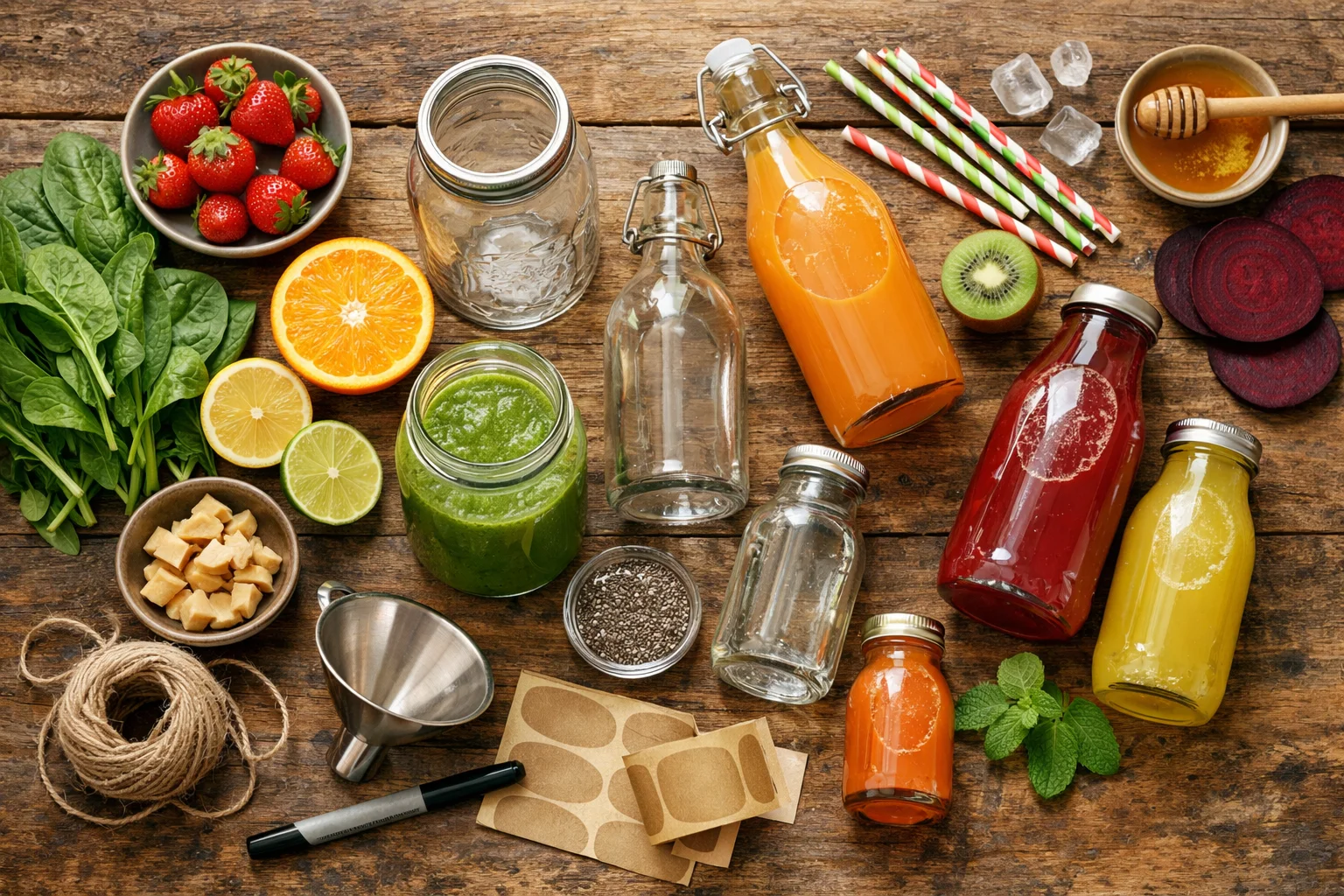
What you will need:
- Mason jars in a couple sizes (16 oz and 32 oz are the sweet spot for me)
- Glass bottles with reliable lids (look for airtight and leak resistant)
- A funnel for clean pouring
- A bottle brush if you go the bottle route
- Freezer safe labels or masking tape and a marker for dates
And because people always ask, yes, you can store juice in either one and be totally fine. The key is being honest about your habits. If you hate washing narrow bottles, do not buy ten of them and then resent your kitchen. If you love the grab and go feel, bottles will keep you consistent.
Here is a quick comparison table I use mentally when deciding, and I am including it in a more organized way because it helps:
In my kitchen, mason jars are the workhorses, and bottles are the busy day heroes. When I make something colorful like a berry juice, I usually bottle it because it feels like a little treat to grab later. This one is a favorite when berries are good: blackberry raspberry juice recipe.
“I switched from random containers to actual glass bottles for my weekday juices, and I stopped wasting so much. No more fridge spills, and the juice tastes fresher on day two.”
Step-by-Step Guide to Get Started
If you are staring at your fridge right now thinking, ok but what do I actually do, this is the simple system I use. It works whether you are team jar, team bottle, or a little of both.
My simple storage routine (jar or bottle)
Step 1: Pick the right size
Use a container that fits your juice amount closely. Less empty space equals better freshness.
Step 2: Clean and dry first
Even if it looks clean, a quick rinse and dry keeps old smells out. Water droplets are not dangerous, but they can dilute flavor a little, especially in small bottles.
Step 3: Fill it up smart
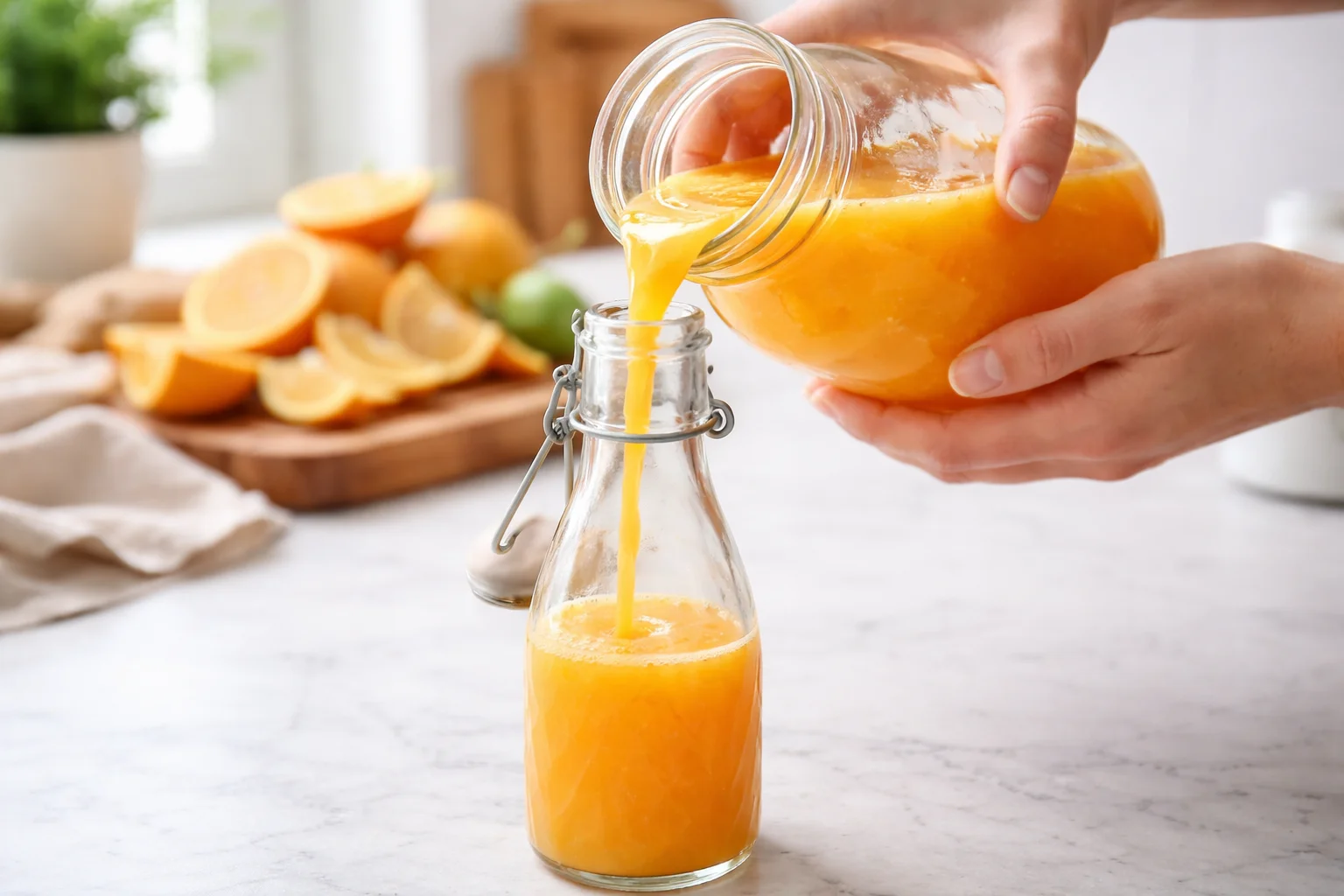
Pour juice in using a funnel. Fill close to the top, but leave a tiny bit of room so you can close the lid without overflow.
Step 4: Seal tight and chill fast
Juice does best when it gets cold quickly. Cap it, then put it in the coldest part of your fridge, not the door.
Step 5: Label it
Just the date is enough. I used to skip this, then I would find a mystery jar three days later and play a risky guessing game.
Step 6: Drink in a realistic window
If you are making fresh juice at home, I try to drink it within 24 to 48 hours for best taste. You can sometimes push longer, but the flavor is usually not as bright.
One more practical tip: if you are making a juice you want before a workout, bottles are super convenient. I do this with beet juice because it is my go to when I need a boost: boost your day beet juice recipe for energy.
Real-Life Examples or Case Studies
Let me make this feel real with how it plays out in my actual week.
Scenario 1: Sunday batch prep
On Sundays I usually make a bigger batch, like 48 to 64 ounces total. I store most of it in a big mason jar because it is easy to pour from, and I like seeing how much is left. Then I fill one smaller bottle for Monday morning so I can grab it fast. In this case, mason jars vs glass bottles juice storage is not either or. It is both, working together.
Scenario 2: Busy weekday mornings
If I am making juice specifically for the next day, I go straight to glass bottles. I know myself. If it is already portioned, I will drink it. If it is in a big jar, I might forget until lunchtime, then chug it too fast.
Scenario 3: Juice for guests
When friends come over for brunch, mason jars look cute and casual on the table. I can add a slice of lemon, pop in a straw, and it feels fun without being fussy. Bottles feel more like a cafe vibe, which is also nice, but jars say, relax, you are at my place.
Scenario 4: Strong flavors
If I make something with turmeric, garlic, or intense greens, I often choose a mason jar because it is easier to scrub. Bottles can hold onto smells unless you wash them right away. This is not a deal breaker, just something I learned the hard way.
So which is best? Honestly, it depends on your life. But if you are trying to decide today, here is my quick personal verdict: jars are easier to clean and flexible for batch storage, bottles are better for grab and go and fewer leaks. And yes, mason jars vs glass bottles juice storage is worth thinking about if you want your juice habit to actually stick.
Common Questions
1) Do mason jars keep juice fresh?
Yes, especially if you fill them close to the top and use a good lid. They are great for fridge storage when the jar stays upright.
2) Are glass bottles better for taking juice to work?
Usually yes. A good bottle with a tight lid is easier to toss in a bag and feels more portable than a wide jar.
3) How long can I store fresh juice?
For best taste, I aim for 24 to 48 hours. After that it is not always bad, just less bright and fresh.
4) Can I freeze juice in mason jars or bottles?
You can, but leave extra space because liquid expands when frozen. Wide mouth mason jars are generally easier for freezing. For bottles, make sure they are freezer safe.
5) What is the easiest container to clean?
Mason jars win for easy cleaning. Bottles are not hard, but you usually need a brush to reach the bottom.
My final take before you start juicing
If you want the simplest path, keep a few mason jars for big batches and a few glass bottles for busy days. That combo covers almost every situation and makes mason jars vs glass bottles juice storage feel like a helpful choice instead of a stressful one. If you are shopping for bottles, something like Ruckae 16oz 10 Pack Juice Bottles, Glass Bottles with Lids … can be a practical starting point because the size is great for single servings. Now go make a juice you actually crave, store it in a way that fits your day, and enjoy that little moment when you open the fridge and see tomorrow’s treat waiting for you.